Monday, February 18, 2013

Film Language and Representation

The 5 minute film extract: 101:00- 106:00

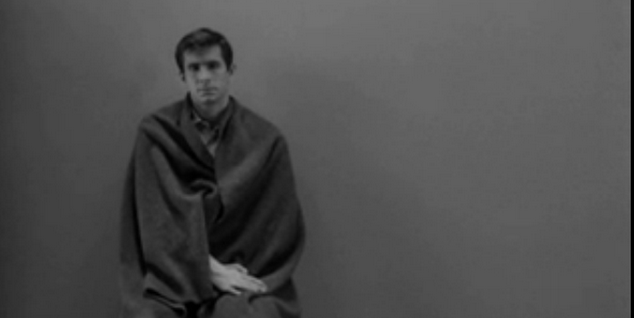
This extract takes place between one hour and one minute and one hour and six minutes into the film. This is when Norman is in the sheriff's office because it is found that he has been the killer all along. Also, the psychiatrist is explaining to Marion’s sister and Sam why he killed Marion. This is near the climax and the resolution of the film and this is the only reason why the location of the police department is  significant. The visual aspect in shown in the room where Norman s in confinement. The camera is static and focused on his face. The camera is only moves at the end of this segment. The issues in the extract are the mental confusion and disruption in Bate’s mind by his mother who is controlling him. This voiceover plays while Norman thinks to himself and this scene is not done in a very extravagant manner with a lot of filmic techniques and variety. This picture shows this scene.

Norman is very disturbed by the voice of his mother. Compared to the last scene, this one is darker and scarier because of the minimal lighting and Norman is in confinement of this room and there are no objects or people with him. It seems like he is trying to resist her but is trapped. This is further shown with the symbol of the fly which lands on Norman’s hand but he does not try and swat it or move his hand. This creates a tension in the film and an eerie sense of uneasiness. This is shown in this picture. The angle of the camera in this point of view shot shows Norman’s perspective and we learn that he is not controlling himself but his mother is. Anthony Perkins does a terrific job in acting in this scene. He is very sinister looking and stares deeply into the camera. It was very creepy to watch this.
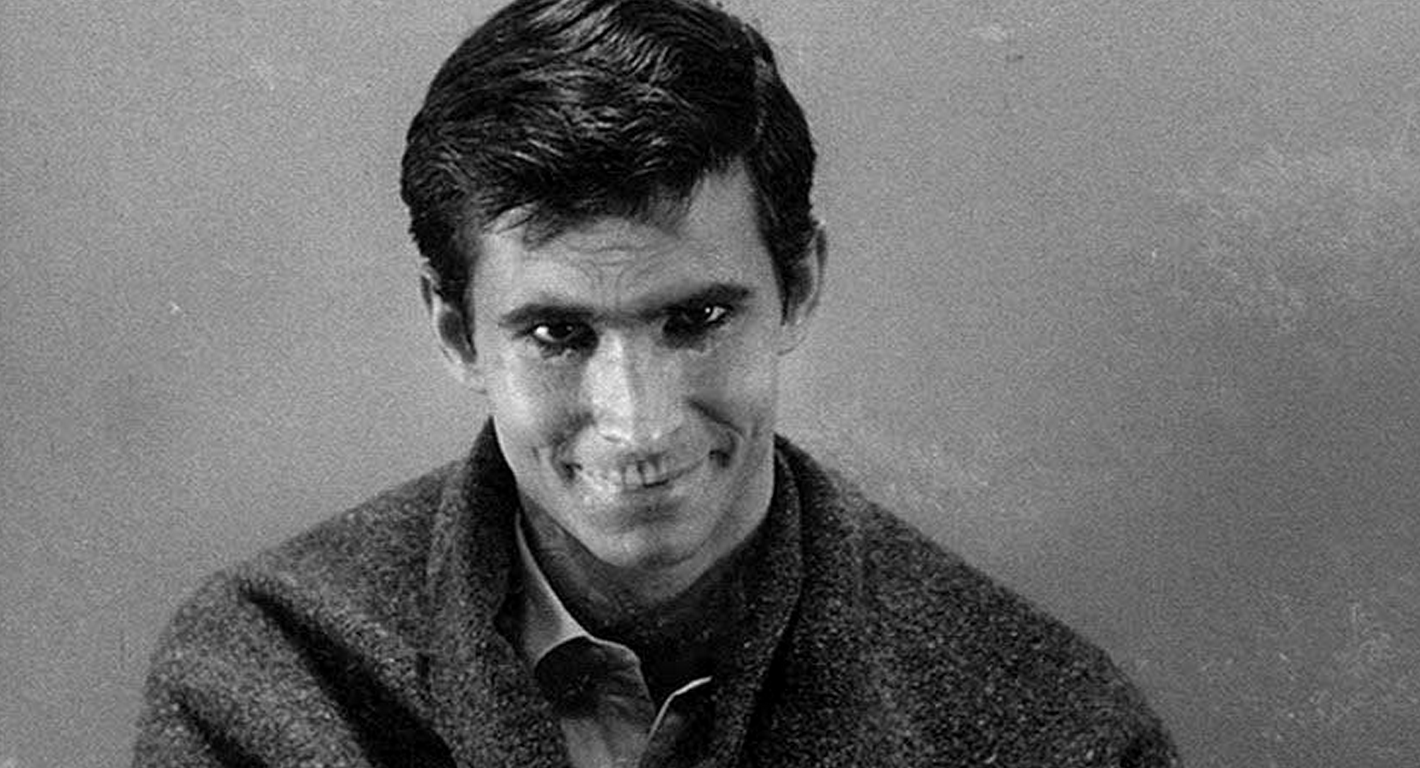

The camera movement is not varied in the scene. It rarely actually ever moves other than when the psychiatrist is speaking to the sister of Marion in his office. Framing is important because some of the objects in his room can be symbols or motifs that were in the rest of the movie as well such as the painting of a bird in the location behind the psychiatrists head. The dialogue is limited and the audience feels awkward because it is a tense and sad moment in the film when the loose ends are being tied together. The score or music in the scene when Norman is just sitting against the wall is very eerie and suspenseful and we almost feel like we are in nightmare sequence when the two voices of Norman and his thought are disrupted by his mothers voice. It is very weird when they begin to speak at the same time and I have never seen this technique used before. Lighting is not very evident in either scene as well. Sound effects such as the buzzing of the fly are key because they enhagnce the tone which is very dark and scary. The stillness of the images we are being shown add suspense because we don’t know what will happen next. Editing in this extract is also simple.
I really enjoyed watching this film and this extract was particularly interesting to me. All of the loose ends were tied and we learn about why Hitchcock chose to include the things that he does in the rest of the film. The twist is shown and we see a conclusion. This extract was not very filmic but rather simple but all the more suspenseful and dark compared to the rest of the film. I think this picture below does a good job in showing Normans character and is symbolic of who his character is.
Genre: Comedy Films

Genre Research: Comedy

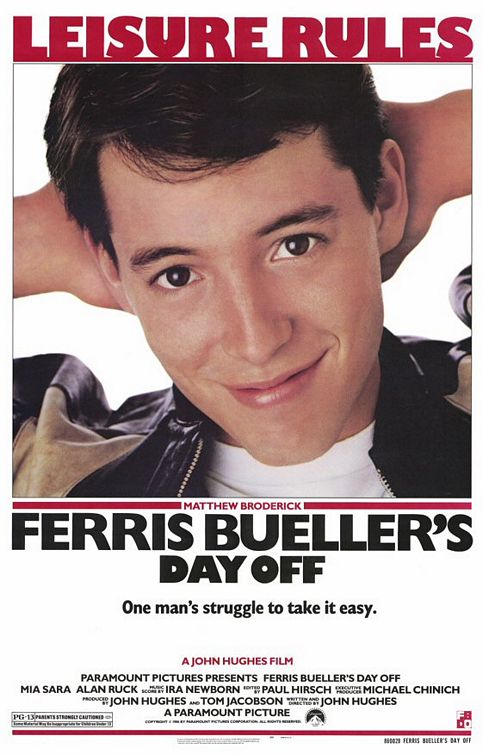
I want to explore comedies and pitch an idea for a humorous piece for the upcoming short film. I will use the famous Ferris Bueller's Day Off  for some inspiration and movie conventions in my piece.  I also want to look more at Dazed and Confused because I think it will be a good complement to my 
film if I incorporate some techniques used there.

The conventions of genre used in this film are numerous. They are light-hearted dramas that are made to amuse and entertain the audience.  There are many jokes, exaggerations, humorous mistakes, unexpected twists, and tons of laughter in the process. These films usually end happily or ironically because they wouldn't truly be a comedy film if they ended sadly or horrifyingly. The actions of the characters and dialogue are primary ways that comedy functions. There is a protagonist or protagonists and usually there is a goal they want to reach and there are many forces that stop them and this helps in propelling the plot. The characters seem to make a lot of mistakes and this leads to some sort of downfall. They also go on a journey and the comedic part is revealed in this act. The settings, production design, and lighting are all varied for comedies. Probably because there are so many sub genres within the genre of comedy. There are romantic comedies, action comedies, comedy horrors, black comedy, sci-fi comedy, and military comedies. Each one has its unique set of production design. For example, romantic comedies will not be as dark and sinister looking than a comedy horror. Also, romantic comedies would focus on the characters being more glamourous and the lighting being brighter in the film. Lighting that creates some sort of mood is not that common in comedy. The film I want to create is an action comedy or romantic comedy. Staging is more focused on as well as what is in the frame. The timing of cuts are extremely emphasized to create a funny moment in the film. Sound effects are key in comedies because they can also be manipulated to create humor.

Logline: A teenage boy ditches school to hang out with his friends on the day of a big exam.

Wednesday, February 13, 2013

Psycho Film Oral and Assessment


Self-Evaluation

I think I deserve a 16-20 on my piece. My actual grade would probably be around a 16 or 17. I think I spoke clearly and loud but there were many flaws in the piece such as awkward silences and stuttering and the many uses of "umm.." and "uh..." to be honest. When I was speaking I think I hit all the points I wanted to but I felt rushed at times because I knew there were specific topics I absolutely had to talk about. I think my analysis of my extract was fairly detailed. I went into some insight about what actually happens in the scene and why, in my opinion, it was chosen to be incorporated in the film. I think I talked about some topics better than others and these lesser ones were more vague and didn't sound as professional. I went into detail about the historical part of the film as well and through this I hit on some of the sociocultural points in my notes. This was a great experience and I learned a lot from it.

Kim's Evaluation

I definitely think Kim's piece deserved a 21-25 on the higher end of the rubric. It was presented really really well and it was very coherent and easy to understand  She hit on all the points she needed to and I actually learned a lot from it. I liked how she knew what she was saying and she sounded very insightful in this response. It had excellent analysis from when Marion in the film purchases her car to the time when she "stumbles on the Bates motel". She explores the casting and how Hitchcock wanted to include blondes as sympathetic and pure characters in his films. She talks about symbols such as the highway in her oral and the importance of characterization and once again she is very intelligent about the small details in her piece. She talks about the lighting in the scene and how it can be symbolic of Marion's character as well. She talk about the individual shots in the scene and also the musical scores and sound effects with a ton of insight about them. Overall, her analysis was excellent and I hope to be able to speak like her when it comes time for my oral Senior year.


Monday, February 11, 2013

Narrative and Film Extract


Psycho is constructed in a linear narrative pattern with touches of a uniqueness within the story. Psycho is organized by plot sequence. The film is based primarily on cause and effect. We see an event such as Ms. Crane stealing the money, then we see the consequences of it and her motives and what she plans on doing in the future. This example of a MacGuffins helps to propel the plot and these shots are part of the films most interesting scene where she is running away. It is also based on time sequence because we never jump to flashbacks or the past other than when Norman tells us of his past. The way in which Alfred Hitchcock presents this order of events is really interesting because of the events that happen in his characters lives. For example, Marion Crane is killed very early in the story. For me it was actually like two movies joined together, one being a sequel to the first. When she is killed, the protagonist eventually dies and the rest of the story is very entertaining which was was not common in this era. Foreshadowing plays a large role in the movie. I found some quotes that highlight foreshadowing, after a second time of seeing the movie, are “We all go a little mad sometimes,” “A boys best friend is his mother,” and “I must have one of those faces you can't help believing". All of these quotes serve to help the reader create thoughts about the present and use these hints to learn more about what happens later on in the story. Also, there is the famous example of the bird scene when Marion and Bates first meet at the motel. 


The nature of the our engagement with the story is very interesting because Hitchcock is able to create such a reaction that it impacts the viewer. This is truly evident in the character Norman bates who is the owner and operator of the Bates motel. This is where Marion stops the night during her escape because she has been driving for countless hours and there is a storm on the same night. When we meet Norman, Hitchcock creates sympathy for him because he is a lonely character. Also, we are told that the poor guy lives with his “mother”. What could be worse than that? He is very courteous and shows a lot of respect and kindness towards his newly introduced guest. He  For example, the audience can build sympathy for the character of psychotic murderer Norman Bates. He talks very politely and shy and we gain a sense of trust in him and we know nothing can possibly be wrong in this character. But soon we realize that is exactly the case. We see his attraction towards Marion when he asks her if she would like to spend the night with him and have dinner together. Then we learn about his darker side when the shocking murder, well not really shocking to the audience of the time because Hitchcock was known widely for his thriller films, takes place. After this, there are many hints that tell us more about his true identity such as his obsession with birds and taxidermy. We also learn about his mother who is really him in the end. He has literally gone psycho and has mental problems which allow him to think he has two different personalities  within his single scrawny body.

 
The casting and the nature of the relationships in the film can be explored in the film's narrative and themes. The casting was very important in the film. Hitchcock used Norman’s seemingly innocent and shy character for a reason which was to create suspense and make that final twist when we realize who the actual murderer is. Yes, its the mama’s boy people. Marion and her really friendly man friend were used to show the motive for the escape. She saw an opportunity to be with him and help him out so she stole the $40,000 dollars from her boss and took off. She switched cars and then she was free. She lands at this motel, and eventually is killed there. Hitchcock wanted to use a working woman so she could be related to in the audience which would make the story more realistic. Also, the casting of the mother was very important. Even though there were no actual scenes or shots with her character incorporated, her presence was very important to the understanding of the film. Hitchcock himself, as shown in the documentary we had the pleasure of viewing in class, didn’t tell the rest of his crew about this during the production! Her character relates to the ongoing theme of lying and these absurd psychological behaviors shown in Norman Bates.

Friday, February 1, 2013

Socio-Cultural Influences in Psycho

Socio-Cultural Influences in Psycho

1. What do the film's themes say about the culture it's part of?

The themes within the film Psycho are numerous. It has become Alfred Hitchcock's most famous and valuable film and the culture it belongs to is that of America during the time period when it was made and intended to be set in. The themes revolved around central issues in this era and setting. One of these themes would be the use of money in society and its impact on characters and people of this era. It also serves to highlight the negative social events and even violent ones. Murders in the period were at an all time high due to a hike in taxes and a need for capital. Also, psychological illnesses such as the one portrayed in the movie are real and they exist today. This has to do with sexuality which poses a strong role for many ideologies and organizations and groups today. It is a very controversial issue and should be dealt with more efficiently.

2. What is the film's geographical and historical context?

The films geographical context is entirely within California and Arizona. The film was meant to be shot on just a studio area. He constructed the studio sets exactly how he envisioned the ending product of the movie. He wanted to put the characters in controlled environment as well. The hotel and house where the character Norman Bates lived and managed were on a set in Los Angeles. Paramount studios had given him a space where he could fully undergo this project. Remember, Paramount was the first and only studio to think his film could be a success so they assisted him in the distribution and screening of the film. The establishing scenes were set in a hotel in Arizona. The car dealership was the only scene other than the previous one I mentioned that incorporated the aspects and authenticity of the time period because it was actually physically at the location rather than on a studio set. The film was very low budget although it raked in many millions of dollars. This efficiency led to other filmmakers to use the tactics Hitchcock used in his films.

3. What big questions does the film address?

The film addresses the questions created by the themes in the film that relate to the culture it is in. It answers the questions about greed and dishonesty and other immoral acts such as lying and stealing.  Mr. Cassidy loses his fortune and he is very careless about them. Also it reveals that these immoral acts are faced with serious consequences that can be as monumental as the initial act of negativity. Marion is killed and through this we know that she died because of her previous acts. It also brings the issue of violence and psychological disorders, which is evident in the actual title of the film. In the issue of lying, it is shown that the truth will find its way out in some shape or form even in the most detailed and elaborate lies that may seem to work at the beginning.


4. How does the film add to the ongoing discourse?

Psycho was made in a time period when there was controversial issues revolving around censorship. The film and many films made in this era incorporated some aspects that were not known regularly to be in film. Some ideologies were not accepted and some things, based on their acceptance into society and the audience, were not shown in film. Psycho incorporated violent murders, although the actual stabbing was not entirely shown. It did depict a hand and blood spewing and then occasional shots of a screaming, squirming woman inside of a bathtub. These shots were put together to show that the woman was being killed without showing the actual violent act being committed. This did, however, cause much controversy and today it is one of the most famous and referred to part of the movie. Hitchcock also used some nudity in the film when Marion is in a bra. This idea was not all that common and society wasn't very accepting of it. In the documentary we also learn that Hitchcock was very fearful of the police. So this “dangerous” aspect was included in the film to add more suspense through the chase scene. After the film was made, people could do anything they wanted with film. Due to his previous fame and reputation, he was already allowed to pass through the censorship laws.

5. Where does it fall in the evolution of the genre? Primitive/Classic/Revisionist/Parody

I believe Psycho is a classic film in the evolution of genre. It has the techniques and aspects that are respectful to the genre. It has incorporated both old and new ideas and the entire work is done so well and truly is a masterpiece. The film incorporates an incredible amount of detail and perfection. st film Historians define classic films as those created when the Studio System was in place, that received high recognition. The film was made during the studio years, so it can be classified as a classic. This was when actors were signed with exclusive contracts that limited them to work for a specific company only. It also continues to receive great recognition and opinions  from great critics.

6. What is the film’s socio-cultural context?

The film Psycho was a monumental film. It created a new ideology within the film industry and also resolved, or went against the censorship bans and issues with what should be put in film in the era. Hitchcock influenced many other directors in the making of the film. It addresses issues that were in the American society. An example would be the issues of violence and love and psychological issues with some people. It reflected a lot on the society to which it belonged.

Sources

http://www.classicfilmguide.com/
http://www.princeton.edu/~achaney/tmve/wiki100k/docs/Psycho_(1960_film).html

Wednesday, January 23, 2013

Hitchcock Historical and Institutional Influences

Hitchcock Historical and Institutional Influences

1. What are the institutional factors that may be important?
a. as a production of a specific producer (i.e. Walt Disney), institution (Disney Studios), specific economic factors (Studio Film), or a political background? (U.S. politics 1959)
2. What is the film’s historical significance?
a. as a document of its time?
b. as a part of history of film?
c. as a representation or reaction to the studio system?

Psycho, by Alfred Hitchcock, is a very interesting film that is famous for being one of the best slasher horror films to ever be made. This film has influenced countless people and entertained a wide variety more. During the making or preproduction of the film, many studios would choose to not fund the film Hitchcock had great visions of. But Hitchcock was known to be a great filmmaker, “Indeed, he was flawless as an editor. In the distinctive rhythm of his cuts, alternately tightening and slackening, and quickening to a climax, we become intimately aware of his physical presence” (464). They thought that including the techniques he proposed for the film, including all of the slasher aspects of the bloodshed and murders, were immoral and extremely gruesome. They believed that audiences would not enjoy the film because it had many aspects to it that were considered controversial. “Even though the villain's body count is only two, the film's "whodunit" plot structure, knife-wielding and mentally disturbed killer, twist ending and 'stalking' camera technique proved influential on films to come” (461) This quote shows how big a role this film played and the technique within it. After going to many big studios and proposing his ideas for his film, he was given a chance. But this deal was only for the screening and distribution of the film and not the actual making or production of the film. The studio was called Paramount Studios Inc. and they assisted Hitchcock in these affairs. The profits were distributed so that the studio gains sixty percent of the revenue made from the profits. Hitchcock finally had a chance and he was a very influential figure in the industry, “They honed their craft by close study of his work, consulting the Truffaut interviews as a kind of bible of filmmaking.” (464)  Politics in the United States were becoming very difficult at this age when talking about film. Censorship laws and bans etc. forced out some genres and films that would have otherwise been huge successes in the industry. The government wanted to filter anything that might cause controversy including nudity, sexual appeal, violence, bloodshed, or incorrect ideologies portrayed within the film. This film has truly left its mark on the future for filmmaking. Slasher films such as Scream or Halloween series all have elements from this era of film and the techniques used then are still used in films that we know very well today.

Hitchcock Genre and Audience

Hitchcock Genre and Audience

1. What tradition or genre is it in?
2. What are the features determining genre or elements that tell us what type of film this is?
3. What other work might it be connected to?
4. Who made this? Why?
5. What can we tell about its’ creators?
6. How does it fit within the director’s other work?
a. Does it share significant narrative or thematic concerns?
b. Does it share particular visual or technical elements?
7. What is the film’s theme?
8. What is the target audience? How does it address its audience?

The film Psycho was a film directed by Alfred Hitchcock in 1960. The film was a suspense thriller and horror film. The genre it would belong to is known as the slasher genre that revolved around violence and gruesome events. The features in this film that determine genre or elements that highlight the type of film it is are highlighting the characters roles, music, relating events, sound effects, chase sequences, motifs, and lighting. Music can add a sense of suspense and drama especially when dealing with films of this genre. Sound effects also add to the nature of the film. The chase sequence when the woman is being chased, or is escaping, to flee to Arizona is very well thought out. In this scene she is being very worried and cautious about her actions. Motifs such as the blade or knife and also birds can add a sense of the genre because we associate them with the type of film being made. Lighting is extremely key in films of this genre although it does not have color and is only black and white. Low lighting can create a mood or tone or even atmosphere by adding an aspect of fear or something of that sort as a build up to scenes in the future. Symbols such as the birds (birds are in the first hotel scene and represent the womans name which is Crane and also talk about other characters in the story) also help to propel the plot and provide backstory if used correctly. These elements are definitely connected to other works of the same genre. The music and tone and suspense leads to a dramatic conclusion and it impacts the feeling of the film. Hitchcock was known to incorporate many suspenseful techniques in his films. He was always wanting to show the audience what he wanted to show in his thrillers and really bring them into the story to captivate them. But to fully appreciate all of his tricks and clues and hints in the story the viewer must see the movie more than just one viewing but many so they can notice all it has to bring in terms of foreshadowing and hinting and what may come in the future. Hitchcock was truly a pioneer in the industry and he incorporated his own ideas and tactics to the films he made while also respecting the techniques that were already being used in other films of the same genre. The target audience would be anyone that could handle the slasher type of films as there are many scenes involving violence and bloodshed. Younger audiences might not have had the ability to enjoy the film because it is in the horror genre. It was mainly made for young adult audiences.