Soviet Montage and Formalism
Formalism is a director's way of styling his film. It is not realistic, but in turn, somewhat like the opposite. Formalism is the visual representation of a director’s own perspective that came from within the artist and not anything portrayed in the actual world we live in. Every aspect has an artistic style and design that comes directly from the directors imagination. very easy to create a formal composition of the works. Usually, these concepts are usually recognizable as unreal and not occurring in our world. They use a wide variety of shots and also have quick cuts and sequences to help show what is happening in the film. There are many types of focus and shots which help to isolate an object or character so all the attention is on that only. Pudovkin's concept of constructive editing played a role as he believed it ruined the way people were to perceive and have their own opinion on film. He used close ups because he thought everything else was too realistic compared to it. The Kuleshov effect was using many images to convey a meaning. This is shown in today’s films as different people have many opinions on different things so when this is used, it gives the viewer a believable aspect. The Eisenstein Montage is the idea that montage could make an idea deeper than what is portrayed. This works in the “Odessa Step” sequence because it shows the juxtaposition and manipulates the viewers perception.
Andre Bazin and Realism
Realism is using film to represent reality. showing or revealing the world and connecting it to the audience point of view. There are usually wide angles and long shot sequences in these types of films. The long duration of these sequences help to show real-life aspects to the shot to make it more realistic. As a result, there are a minimal variety of shots used. There are also minimal editing techniques used to preserve the integrity and world-like qualities that is being portrayed. The use of panning and tilting is also used. The use of deep focus is also critical because instead of focusing on a specific action or character in the shot, everyone and everything is in focus so that the viewer can notice all of the things happening at once which is similar to our own perspective through our eyes. Andre Bazin’s frustrations with Classical and Formalistic film making include the obstruction of a realistic point of view by using excessive editing, shots, and focus. He strived for a more unmanipulated approach in his film making. Realist filmmakers strived for the most realistic aspect they could include worldly shots in their film to make it seem more so the audience can relate to its ideas.
Thursday, October 4, 2012

Tuesday, October 2, 2012
Advanced Editing Notes
The two short films: the "Arrival of a Train" and "Damsel in Distress" highly relate to aspects of Realism, Classicism and Formalism.
There is a high contrast between camera work including the composition of shots, their angles, and the movement of the camera. In "Arrival of a Train", we see a lonnnng, continuous shot of a train that is arriving at the station, hence the name. This is entirely one sequence shot as it is a single recording of time. The angle is static and does not change at all within the scene and this provides for one viewpoint and angle and offers the viewer a single perspective on what is happening in the shot. The camera is not moved at all the only movement in the shot is the entire train as well as the reaction of the people waiting to get on the train that are standing in the side area. In the short "Damsel in Distress", however, we see the exact opposite. shots literally last a couple of seconds and this duration plays a large role in how we see the movie because of the rapidness of the succession of events. There is a lot of movement, a wide variety of angles, and the majority of the shots are composed very differently.
Also, the edits of the shots in the films are differentiated. In "Arrival of a Train", there is no edit, cut, or jump in action throughout the entire scene. The entire thing is completely realist. On the other hand, "Damsel in Distress" is the opposite as it highlights the ideas portrayed in techniques for fast, quick cuts that are very short in duration. In this film, there are two conjoined plot lines and we see both perspectives of the conflict while the protagonist is trying to get to the tracks to save the woman and the womans conflict of being very close to dying. There are many edits in this film to show the rising tension and conflict among the characters and their relationship.
There are many interesting characteristics of how the story is being told in both short films. I found it highly interesting how the second film "Damsel in Distress" was told because it has a series of shots selection, angles, composition, characters, conflicts, and the plot was really well-developed and easy to understand although the shots didn’t have very long durations or slow pacing. This intensity helped to show the plot in a more beneficial way. In "Arrival of a Train", however, everything except for the people and train seems to remain completely static. It is very boring and there is nothing to truly anticipate. We see one perspective because the camera and angle do not move and this restricts the viewer from any further information so it is more boring and less informative about everything else happening.
Thursday, September 27, 2012
Plot Outline - A Man Dying
Plot Outline: A man dying
| Scene | Dramatic Intent |
| Have man get into a terrible car crash Character: Man is panicking, entire life flashes before his eyes While he is being transported out of the car all the way to the ambulance and hospital we see flashbacks Setting is the open road, it is raining Flashbacks are happy/sad/pivotal moments in his life, provide the backstory and relationships throughout life, quick cuts Flashback of childhood, family, and significant events in his life. Cops at the scene, people screaming and crying, blurred out police and ambulance lights in the distance sound of peoples screams Frequent cuts to medic reviving him Final Reveal: It is revealed that the man was widely abused when he was young and he was trying to kill himself by drifting into the other lane while the rest of the story shows how he got there At the end we see that the man has been telling the story of his life through this, entire story was a flashback, also provides for the backstory | Portrays a man who is dying and reveals emotional characteristics Flashbacks provide context and story of the mans life, a close perception of who he truly is Setting helps to show backstory and how he arrived at this final point also through flashbacks and shots of the car crash and rain Gloomy and depressing atmosphere with sad music, highlights mood of the story by setting the way we see the events occurring. Mood is extremely sad because the man is fatally injured and dying Help the emotional aspect of the film because it brings out the feeling in the scene to show the sad aspect of his life, and now he is dying, shows depressing moments through relationships Goal of the film is to save the man’s life is the present part of the film, while the flashbacks show his life story, Obstacle is the injury through this car crash Show the realistic aspect by going to what is really happening. Reveal obstacle and goal because there is the motif of life and death The rest of the story explains the events that led him to that point in time. This reveal of his suicide shows his phycological and emotional ideas about life and everything he has been through We realize the entire thing has been a huge conflict and that the man is telling the story of his life and how he came to this moment for the future tense to show that he is now ok and still living, shows us what happens in the end and gives us backstory |
Sunday, September 23, 2012
Characterization
Characterization Theme

The character I chose to talk about is Harry Potter from the movies based on JK Rowling’s extremely popular book series. in this case he is trying to achieve his goal of killed the Lord Voldemort in the final installment of the series called Harry Potter and the Deathly Hollows Part 2. Throughout the entire series, Harry (played by Daniel Radcliff) is characterized as a adventurous, intelligent, courageous, and benevolent character that takes it upon himself to defeat the evil Lord Voldemort who killed his parents and friends in the past movies and books. In this particular scene from the movie, Harry and Voldemort go at it in one of the final scenes and this is the crucial battle that determines who will win after all those years of fighting. The physical description of Harry is interesting in this shot. His body is positioned so he can use his magic and try to outdo and overpower the Dark Lord. This offensive body language adds to the depth of the picture and shows us that he is vulnerable in this position but is using all his strength to win. His raggedy clothes are a representation of his difficult journey and what he has gone through to be at this pivotal moment in his life. The only obstacle in this scene is Voldemort and his army which is opposed by Harry’s army which is composed mainly of students and teachers attending Hogwarts School of Witchcraft and Wizardry. In the end, Harry wins this battle. He has much help from everyone that cares about him and in this particular scene, he out powers the Lord and uses all of his strength and does whatever it takes to achieve his goal in elimination evil from both this magical realm and the real world.
Monday, September 17, 2012
Subscription Article
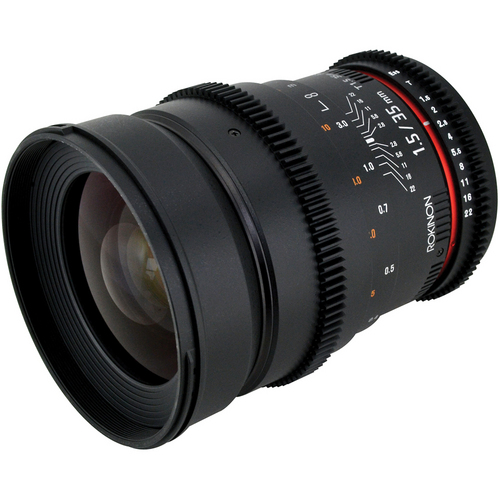
Based on a camera lens review on OliviaTech.com, I learned a lot about The Rokinon 35mm T1.5 Cine Lens for Canon EF. It is a beneficial tool with many features such as aperture control rings. This was very interesting to me as ring has been “de-clicked” for smooth iris pulls, meaning there are markings on the camera that tell you where you can pull focus in a shot. This lens is also very similar to the Rokinon 35mm f/1.4, a popular lens that is widely used for its great sharpness and contrast. There are many layers in the lens which reduce flare and also depth of field markings too. There is also a bayonet mount lens hood which serves many purposes and looks extremely cool as well. Although I do not own one of these terrific lenses, I would recommend getting one to enhance the filmmaker in all of us as it is “optimized for digital cinematography”.
Saturday, September 15, 2012
Film Review- When You Find Me
When You Find Me Review
Behind The Scenes : http://www.youtube.com/watch?v=1okOV4Q_ZYA&feature=relmfu
The enjoyed watching this short film and I found it to relay a very good plot story and theme as well as the film aspect and the perspective of a film maker was also interesting in terms of shots, character, setting, relationship, and the other elements used in “Project Imagination”. Ron Howard incorporated eight photographs from eight different users that submitted random photos in hope of getting chosen in this online film festival. Ron Howard uses many special effects and cinematic techniques in this film which has all the different themes which help convey the overall meaning of the story. Throughout the film, we can see the use of many symbols such as the spaceship to show innocence and helplessness, large gates to represent fear and courage, the mysterious and enlightening tree which represents afterlife and hopes and dreams. In the movie, they also used high-end equipment as well as a prototype Canon C3000 which worked extremely well and was easy to use in comparison with full-production Hollywood cameras. In relation to the plot, the events occurred in complete unity and it flowed while the film technique just enhanced the way the viewer saw the emotional and thought-provoking short film.
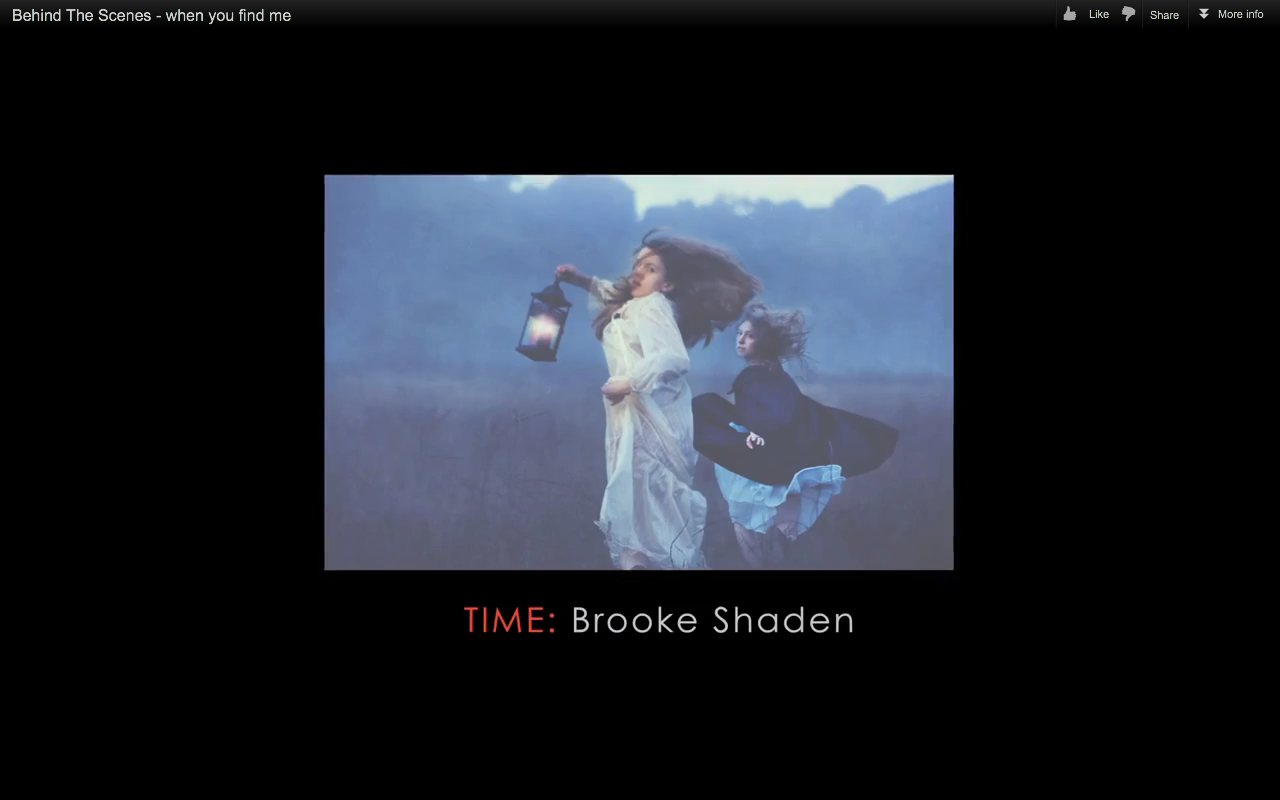
The
first theme portrayed in the film I will talk about is time. In this
original picture submitted by a random person, two girls are shown
looking in the direction of the camera or viewer. They are running away
from something terrifying and they are holding a lantern which can
represent that there is darkness where they are headed and this sense of
adventure captivates the person watching the film. The use of innocent
young girls as the characters adds suspense to whatever poses a threat
to them. The lighting in this shot is dark and it creates danger and
mystery and the fact that the image was produced sometime near dusk
before complete nightfall. There is a shallow focus and the center of
the picture is the two girls. Due to the older sister in the picture is
wearing pajamas and looks as if she just woke up, we can convey how
Howard used this element in his film because the scene occurs when the
younger sister has a dream and wakes up and runs off and the older one
chases her.

The
next element Howard chose to incorporate is mood. In this picture, we
can see two different aspects of color which is interesting in my
opinion. It shows the point of view of the main character which is the
elder sister in the short film “When You Find Me”. We see a shot with
many things going on at the same time as well. The background is a large
city with blurred lights and we can see clear street pathways and
buildings with represents a vast landscape of an urban area. The
character in the shot is a young girl. Telling by her facial expression,
she looks extremely sad and in a deep thought and this is also conveyed
through the lighting and shadows on her face and the use of black and
white coloring in this portion of the picture.

The
next theme of storytelling depicted in the film is setting. The picture
is of an abandoned plane cockpit and there is a lot of vegetation and
plants that have grown inside of it after it crashed in the middle of
the wilderness. This is a very colorful image as it has a wide variety
of colors and ruggedness shown by the broken interior of the cockpit. It
is clear that it doesn’t function anymore but Howard uses this
particular image and scene to show the imagination of a young girl in
his film when she believes she can just go ahead in a rocket ship into
outer space and heaven to see her mother who just passed away. We can
see many blues and greens in the picture which highlight that no one has
been in this isolated area for a long amount of time. The angle of the
shot allows us to see throughout the windows of the plane into the
wilderness which is overpowering and adds adventure because we can not
see too far into the distance due to the dense vegetation.

The
next element that was portrayed in the film which was submitted through
the film festival is character. In this shot, which most likely
inspired the main character of the “When You Find Me” short film, the
character is a very young girl sitting on a swing in a park of some sort
but it seems to be empty because we can see nothing or no one in the
foreground and background. This action shot shows the girl swinging back
and forth and the girl seems very sad and overwhelmed by helplessness
and isolation. The use of the black and white effects add even more
sadness and blankness in the photograph. The shadow of the swing and
tree and her hair made the photograph more effective in describing the
negative aspects of the picture. The shallow focus allows us to focus
all our attention of the thoughts and ideas and the position of the
character and her surroundings as well.

Another
element used in the film was the relationship between characters. In
this picture we can see the relationship between two people, or
characters, that is very emotional and significant in the understanding
of the plot. The two people are crying and faced with many hardships and
we can assume this based on their facial expressions and the way they
held each other in their arms. The blurred foreground of the picture is
medical equipment which relays the topic of the obstacle to a hospital
and a serious, perhaps life-threatening situation in which they are in.
The use of black and white adds a sense of sadness and depression as
well. We can also notice how the couple is clearly in focus shows their
despair through the way the shot is composed.
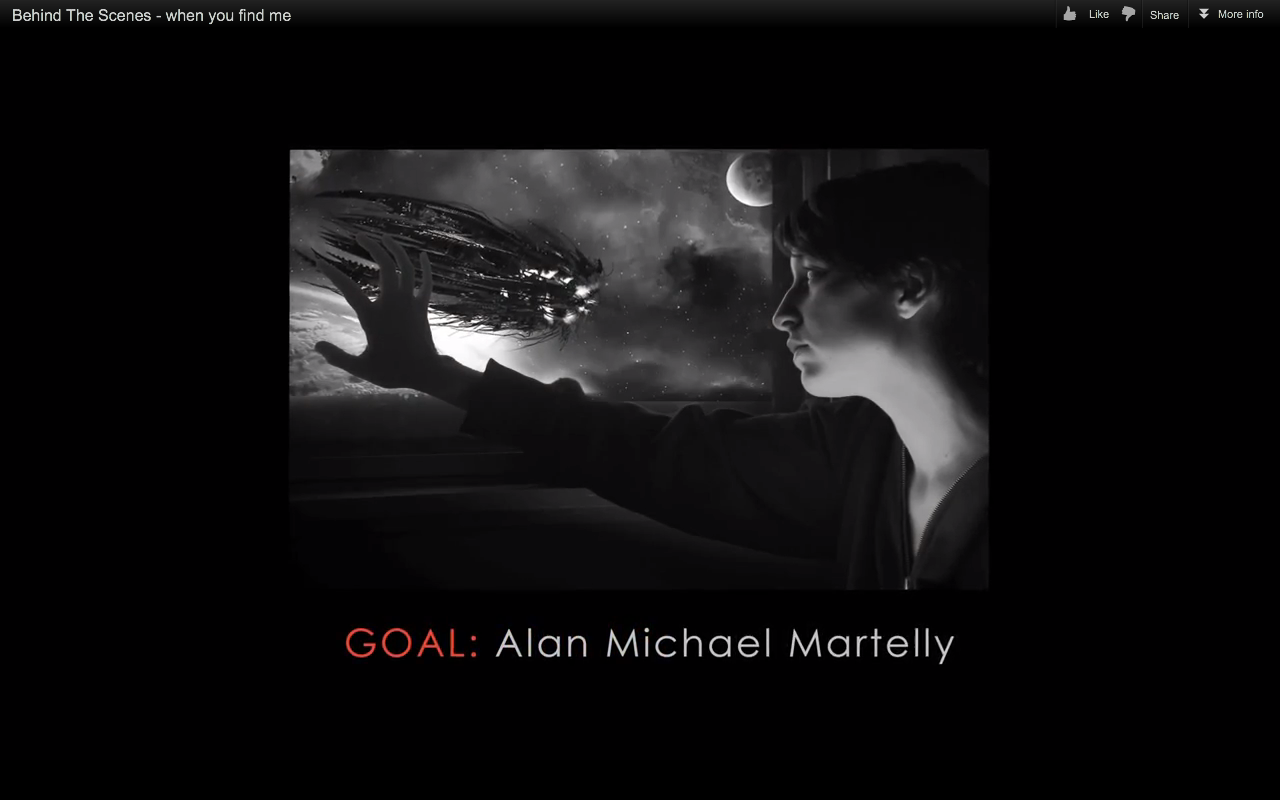
A
next element would be the theme of a goal. In this photograph it
depicts an older woman who longs to meet her mom that died when she was a
young girl. When she was young and her mom was about to die while in
the hospital, the girl got in a fight with her dying mother and felt so
bad about herself when she died because she didn’t get a chance to say
goodbye to her. The arm of the woman shows the longing for her mother
through the transport of a spaceship. The relates essentially to her
dream and her goal which she desperately strives for which is meeting
her mother. The visual effects of adding space-like aspects of the moon
and other planets and the diversity of this ship adds to the sense that
she is isolated and desperate to reach this goal. The black and white
without any color adds to the sense of sadness once again.
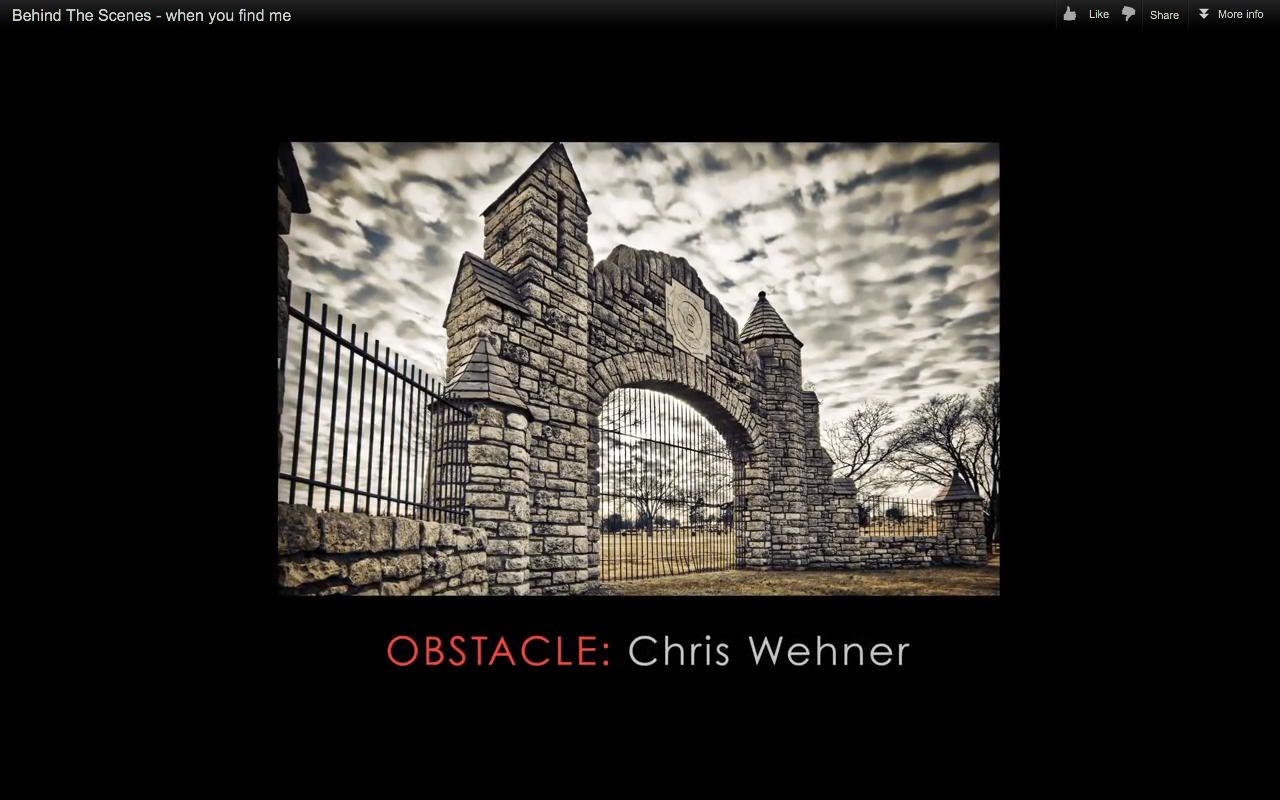
The
next element of storytelling is obstacle. The obstacle in this picture
is obviously the large, intimidating gates and castle-like brick wall
surrounding them. This adds a sense of danger and fear to the picture.
The rural area of the grass and worn out looking area looks like it has
been abandoned. This gives a scary feel to the picture and isolation and
sadness because the girl in the movie finds a way to climb over and she
overcomes this obstacle to reach her goal. I found the clouds to be
very interesting in this picture. The effect of them adds darkness and
the edges of the picture get darker and adds darkness to the overall
picture. The side view of the angle of the gates make it more
interesting compared to a shot directly straight looking at the same
object. The shape of the clouds also shows the vastness of the landscape
and the rural area of the setting.
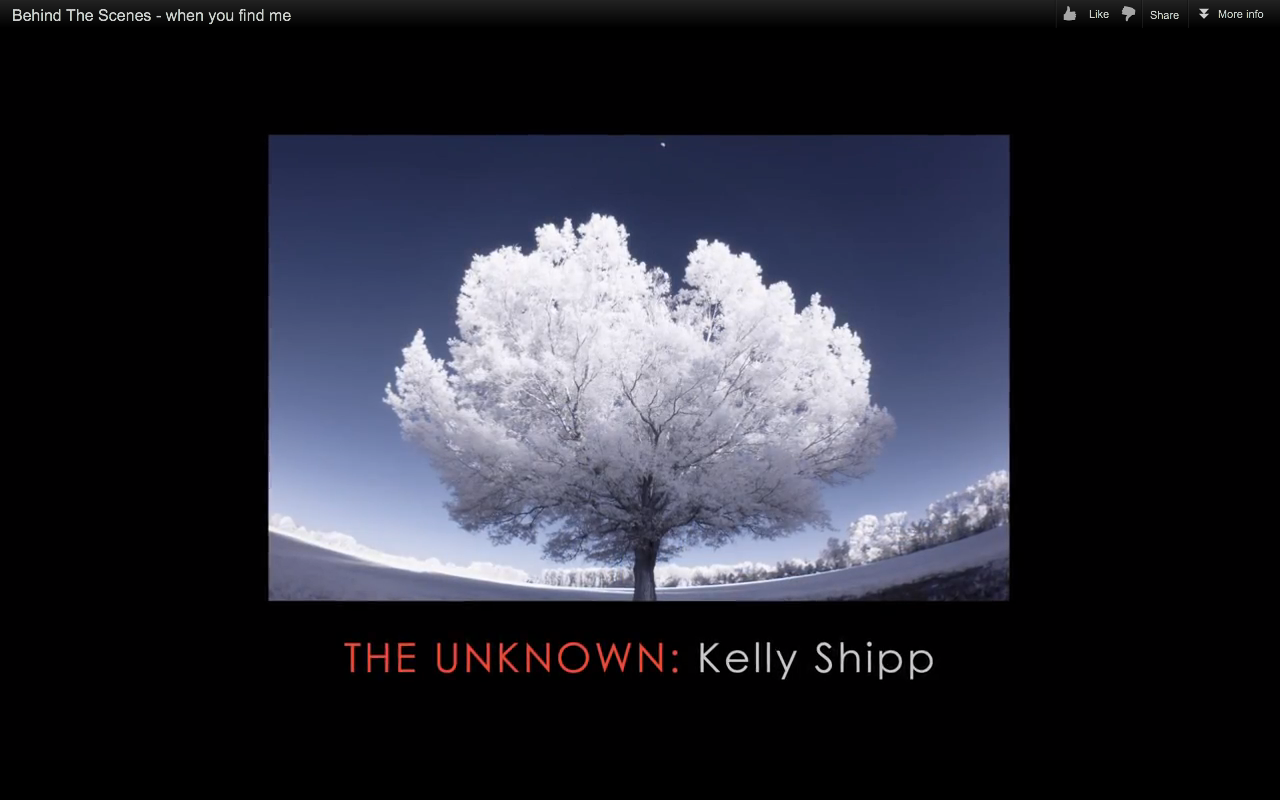
This
picture in the “When You Find Me” short film was symbolic in terms of
the dream land in which both sisters visit their dead mother when they
say goodbye to her a final time. The color of this is very interesting
because it adds a surreal feeling to the picture and the effect has a
large role in this scene because it differs from every other scene and
makes it a special setting for a dream-like state. The angle and type of
shot portrayed is also crucial because it is a wide angle fisheye lens.
The center of the picture is the tree as well. The photo is extremely
unique and I enjoyed the dream-like state and it added a really good
feel to the overall film.
`
Tuesday, September 4, 2012
10 Themes of Storytelling

The first theme of storytelling I chose was setting. Setting is the position, place, or surroundings in which something is located. In the picture to the right the setting plays a large role in understanding the story which is truly portrayed through the picture. There are many aspects to this particular shot which show the theme of setting. First of all, we can see the use of the obvious sepia-black and white effect which controls the entire mood and tone of the picture as a whole. It adds a mood which tells us a story and adds a sense of depression, sadness, and almost a desperation of some sort to get away and escape. The use of the railroad on the z-axis gives us a sense of adventure and a need to leave through transportation of a train. We can also see it from a point of view that tells that a person is waiting for a train that will never come or something of that sort. The lighting in this shot is very unique because we rarely see it in actual films but in singular shots rather. It bounces off the clouds and the rails and gives a sense of darkness and an evil kind of aspect which can also be a sad one as well. The clouds themselves show a lot of depth through the photograph and continue through the theme of setting. The grass and even the trees in the background add the idea of isolation and loneliness in the foreground. The background itself, which is blurry because of the use of shallow focus, could show where the train can be coming from or tell us where it is going or headed after it passed the place where the shot was taken. If we take a closer look, we can analyze the use of the rule of thirds.Overall, the setting in this picture plays a large role on how we view it from an analyst's point of view.

The next theme would be the Backstory. The backstory refers to the story behind the physical image that is portrayed. It is the visual representation of the picture and the meaning behind it. In this visual above, we see that the picture can have a vivid backstory and this could have been taken somewhere in the lush mountains. We see a small town or village and the way the picture is composed adds to the meaning. For example, there are bright areas as well the shadows on the buildings in the village. The brightness of the clouds and the sky add a sense of joy and adventure and the person viewing the still picture can see the way it balances with shadows in the city. This can show or portray darkness and this can come in handy when making a film in relation to what you want the viewer to feel by the way you choose to express a certain shot. In my opinion, I would use this kind of shot in an action scene where there might be a fast-paced scene or maybe a chase that goes into the jungle. The light in this shot is very well expressed and choreographed because we can sense mystery and suspense and this would be the basis for the backstory of the picture.
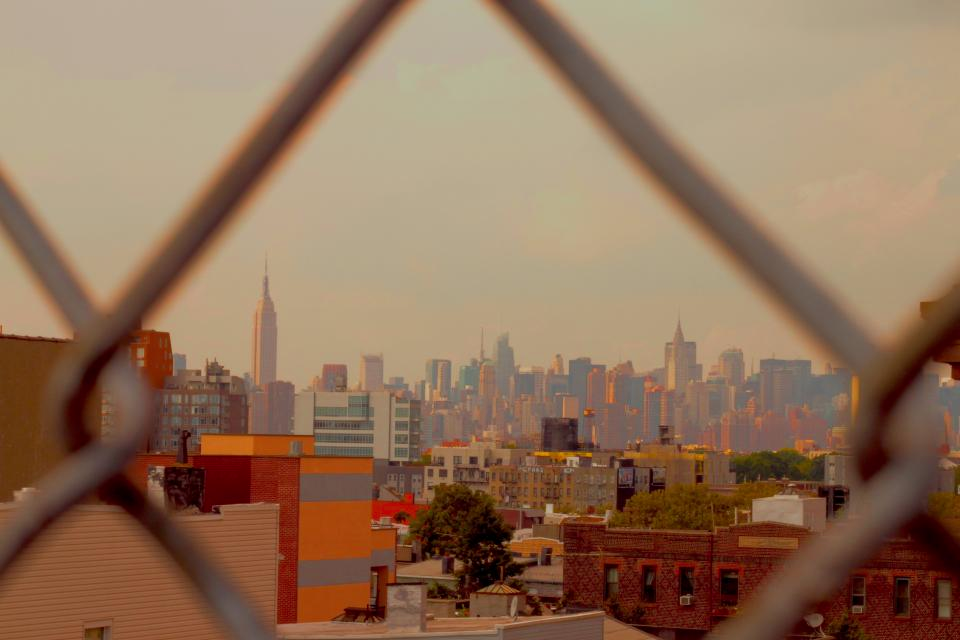
The mood in a picture refers to the general theme of the picture. In this picture the mood can be described as very lively yet gloomy due to the effects, lighting, and focus of the shot. I enjoyed the lighting in the picture because it portrays the city skyline as the main focal point of the setting in the picture. The lighting and effects make it seem like there is a path leading to the city due to the focus of the shot as well. The use of the fence adds a sense of isolation and captivity and you almost get the feeling that you are being kept from this city and don't really belong there at all. The focus is a shallow focus because the foreground is blurred and the background is clear and very precise in terms of the way it looks to the viewer. The mood of the picture makes it seem as if the picture was taken sometime near the morning or right after the sunset so it changes the way we view the picture as whole. We can also see the brightness of the buildings in the background as the light is reflecting off the panes of glass on the sides of them from the left side.
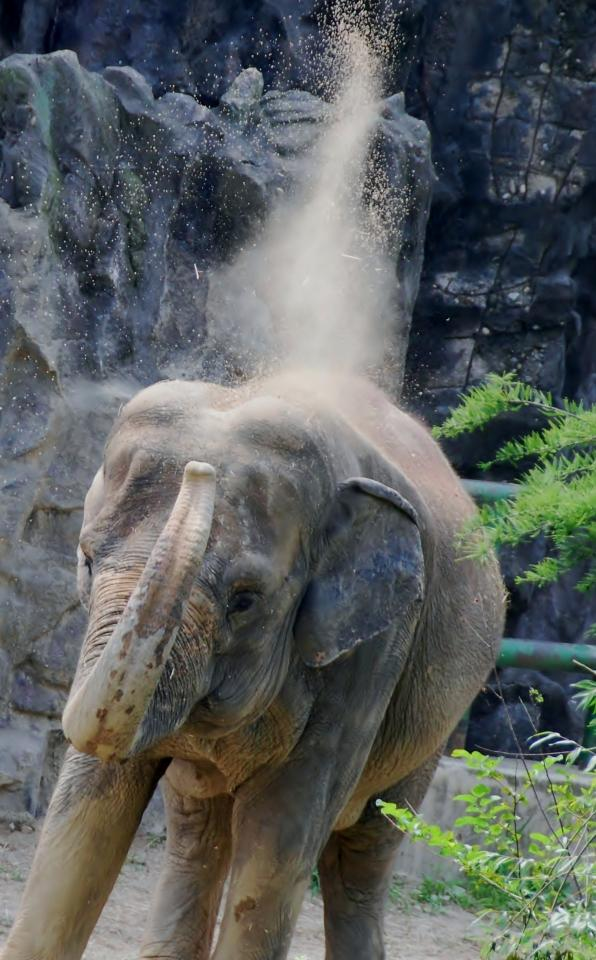
The character in the picture refers to the object or person which is the main focal point within the photograph. The character in this particular photo is an elephant. It is an action shot of the elephant in a wildlife surrounding, such as a zoo or it might have been taken in an actual elephant tribe in the wilderness. He is blowing water onto its back to cool itself from the sun which is the backstory of the picture. The lighting in this particular picture is perfect because everything is shown without shadows which adds a lot of detail, in my opinion, to the pic. The picture also seems to be tilted slightly and it helps to show the entire elephant and better portray its physical features. The vivid color of this helps to add to the surroundings and show the viewer exactly what is happening. Overall, the character in the picture is the main subject and the viewer focuses on it the most while looking at and analyzing a photograph.
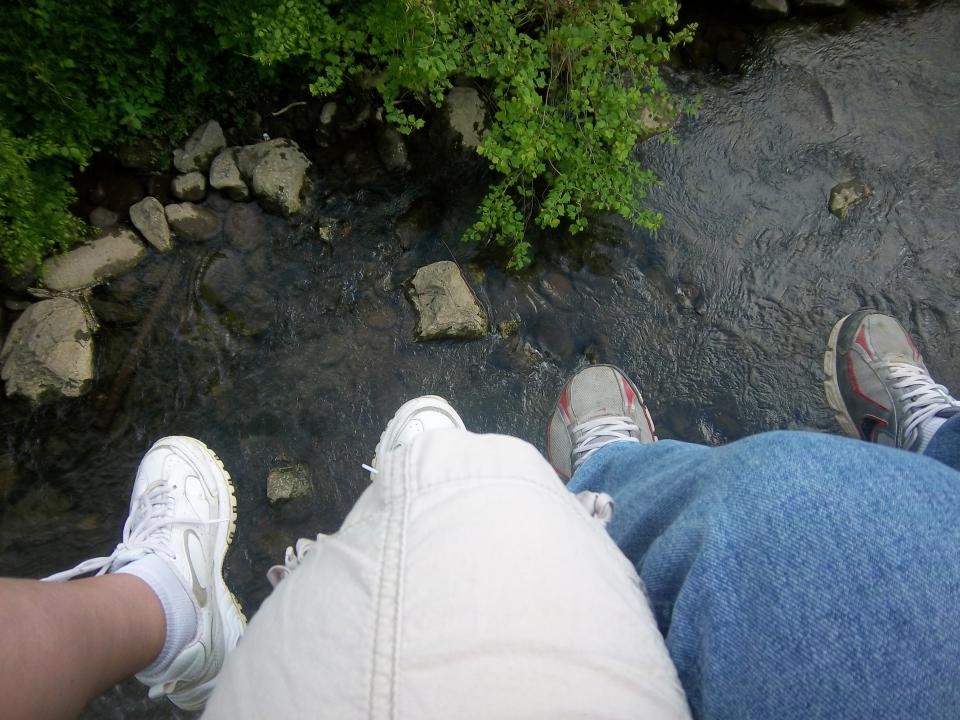
Obstacle is defined as something that blocks something else or hinders its progress. In this picture the obstacle would be a large river beneath the people. The point of view of the shot is from above, almost as if it is the people looking down toward the river which they are jumping towards and perhaps they are afraid to be jumping from a cliff. I like the focus in the shot because the foreground and background are both in focus while the picture was being taken. We can also only see the feet of the people and the picture is from their perspective and it adds a sense of mystery as well as excitement, fear, and suspense about what is going to happen to the people next. The can also be gliding or in another form or air transportation while looking down towards the ground.The main portion of the picture is the river and vivid green colors and the movement of the water add many details. The use of the rule of thirds enhance the picture as well because we can compare what is happening in the foreground to the background. Obstacles play a large role in the meaning behind a picture because they can bring out emotions from characters or any other subjects in the photo.

Relationship is the connection between two things emotionally, physically, or mentally. The relationship in the picture is the two friends having a good experience while driving bumper cars. The setting also plays a large role in the picture because it adds lots of detail. The colors are depicted so perfectly that we can see the intensity and the brightness of the exposure in the picture adds excitement as well as the lighting. The lighting specifically adds many more aspects to the picture. It bounces off the bumper cars and gives more detail to it. The focus of the shot adds depth to it and puts all the attention on the faces of the girls in the center of the portrait. It is a shallow focus shot and the midground also has people on bumper cars but we pay less attention to this detail because we focus more on the girls. The angle of the shot is eye-level to the girls and this helps to add a sense of reality and we can almost imagine that we are also in a bumper car waiting to crash with another and have fun while doing it just as the girls are in this action shot in this particular picture.

Goal is the result things want to receive as a consequence of something else. In this picture the goal would be getting to the ocean and . The turtle in this picture is isolated on the sand and it is an action shot. By putting the turtle in the center of the shot it is the main focus point of it. We can see movement in the water and the goal is to get there after being born after many months in the sand on the beach, which is their new home for a lifetime until they go back to the beach to keep and bury their eggs which will be their young in the future. the process is repeated and the main goal is to survive in their surroundings and adapt to how they are meant to live. Other than that, the angle and point of view of this shot is very interesting. We see an aerial view which helps to capture all of the action going on in the shot including the sand formations, water, and the actual turtle. The lighting seems to be pretty general and there are no shadows in it.
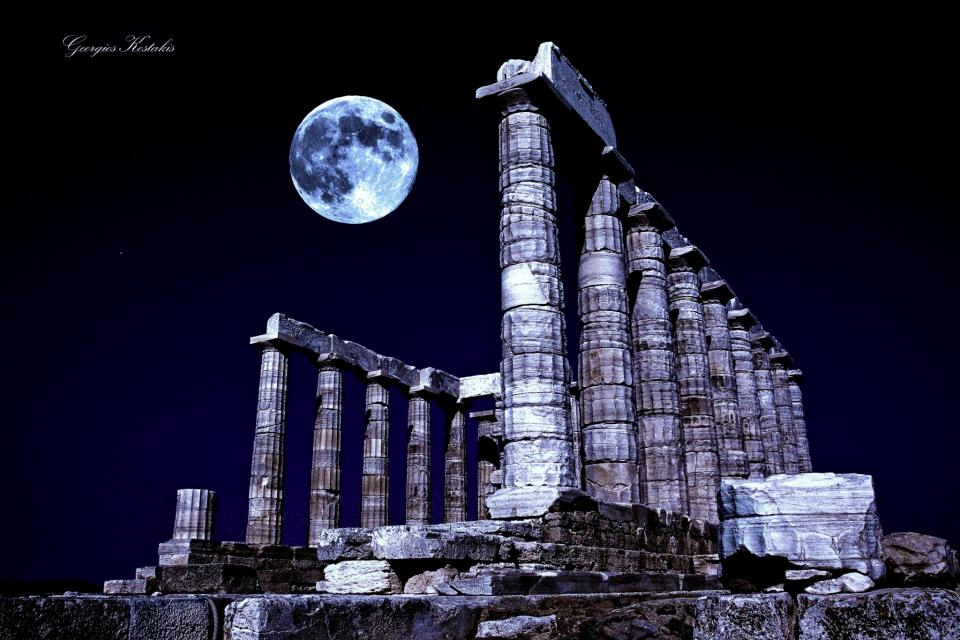
The Unknown is something that is not known or is hidden or not able to be perceived. In this picture of Poseidon’s palace in Greece which was constructed thousands of years ago by the ancient Greeks, we see many shadows, soft edges, shapes, lines, and structures that help to show the unknown. The shadows in the picture add to it by adding suspense and mystery to the context of it. The lines add depth to the photograph and moon in the foreground. There are objects along the z-axis and through this we can see how great this specific monument truly is. This suspenseful image elicits a sense of fear almost as well as other emotions based on the pure darkness of this unknown in the photograph.
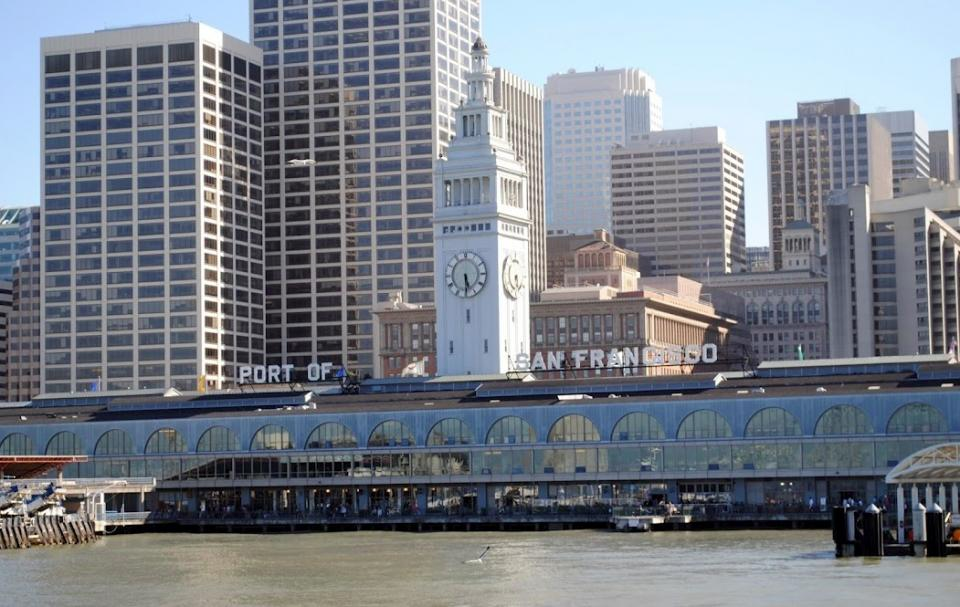
Time is the order of events in which we follow on an everyday basis. In this picture time is portrayed in numerous ways from my perspective. We can see a clock tower in the city of San Francisco and this portrays the physical time on a clock for the people to follow. This shot in particular is very special because it is from a boat where it was shot. It is also looking upwards on a tilt which makes the city buildings and skyline as well as the clocktower look truly magnificent and powerful and great compared to an aerial shot which would make it look smaller. The light also helps to tell the story of when this picture was taken in relation to the period in time during the day. The light which is coming from the sun from the right side of the picture is dominant and it allows for shadows in the streets. It gives me a sense that this picture was taken in the morning or just before a beautiful sunset in the distance. the mood of this picture is very joyous and bright partly because of the exposure of light being emitted in the shot.
Blog Post 9 Themes of Storytelling
Subscribe to:
Posts (Atom)